
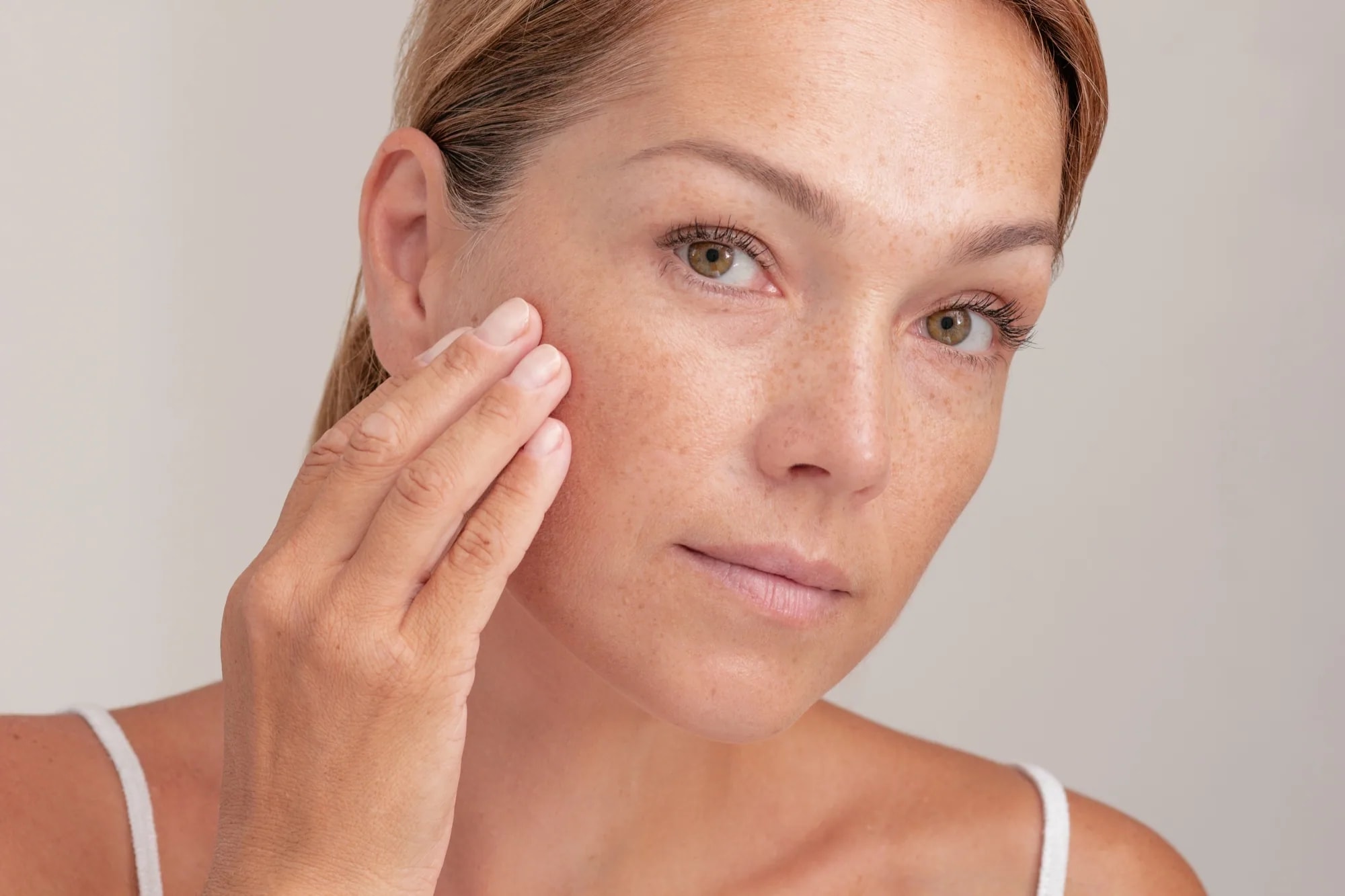
The main difference in melasma vs sunspots is the cause: sunspots come from years of sun exposure, while melasma is driven by hormones, heat and light, and tends to come back. That difference matters because the treatments that clear sunspots well, such as some lasers and light devices, can make melasma darker. Before you choose a treatment, it helps to know which type of dark spot you have. A dermatologist or experienced provider can confirm it in person, often with a simple skin exam.
Both conditions are forms of hyperpigmentation, which means extra melanin (skin pigment) collects in one area. They can also appear together on the same face, which is one reason a professional assessment is worth it before you spend money on treatment.
Melasma vs. Sunspots: The Short Answer
Sunspots are small, distinct brown spots on sun-exposed skin that often fade well with laser, light treatments or peels. Melasma forms larger, symmetrical patches, usually on the cheeks, forehead or upper lip, and needs a gentler, long-term plan built on sun protection and topical care.
What Is the Difference Between Melasma and Sunspots?
The difference between melasma and sunspots shows up in how they look, where they appear and what triggers them.
-
Sunspots (solar lentigines): flat, tan to dark brown spots with clear edges. They appear on the face, hands, shoulders and chest after years of UV exposure and become more common with age.
-
Melasma: blotchy brown or gray-brown patches, often matching on both sides of the face. Hormonal changes, pregnancy, some birth control pills, heat and visible light can trigger or worsen it.
-
Pattern over time: sunspots stay fairly stable once treated if you protect your skin. Melasma is chronic and often returns, especially in summer.
Any spot that is changing in size, shape or color, bleeding or itching should be checked by a dermatologist, since some skin cancers can look like a harmless brown spot.
Sunspot Removal Options
Sunspot removal usually works well because the pigment sits in defined spots near the surface. Common options include:
-
Intense pulsed light (IPL), including BBL®: light energy targets brown pigment, which darkens and flakes off over about a week.
-
Pigment lasers: Q-switched and picosecond lasers break up pigment in individual spots.
-
Chemical peels: remove the outer layers of skin to lighten surface spots.
-
Cryotherapy: freezing individual spots, used by some dermatologists.
Light and laser treatments are not equally suited to every skin tone. In darker skin, the wrong device or setting can cause new dark marks (post-inflammatory hyperpigmentation), so ask about your provider's experience with your skin type.
Melasma Treatment Options
Melasma treatment focuses on calming pigment production and protecting the skin, rather than removing spots in one session. A typical plan includes:
-
Daily sun and light protection: broad-spectrum SPF 30 or higher, reapplied often. Tinted mineral sunscreens with iron oxides help block visible light, which can worsen melasma.
-
Prescription topicals: since the 2020 CARES Act, hydroquinone products can no longer be sold over the counter in the US, so hydroquinone requires a prescription. Providers may also suggest other lightening ingredients.
-
Tranexamic acid: some clinicians prescribe it for melasma, which is an off-label use that needs medical screening.
-
Gentle in-office treatments: light chemical peels and carefully selected low-energy treatments, used with caution.
Aggressive heat-based lasers and IPL can trigger melasma to flare, so many providers treat melasma conservatively.
What Is the Best Treatment for Dark Spots on Face?
The best treatment for dark spots on face depends on which type of pigment you have and your skin tone. For sunspots, laser or light treatment often gives clear results in a few sessions. For melasma, a long-term plan built on sun protection and prescription topicals is usually the foundation, with in-office treatments added carefully. If you have both, your provider may treat sunspots first, then switch to melasma maintenance.
How Hyperpigmentation Treatment Costs Compare
Hyperpigmentation treatment costs depend on the method, the number of sessions and your location. The American Society of Plastic Surgeons reports 2023 national average physician fees of $697 for IPL and other combination laser treatments and $1,829 for skin resurfacing, a category that includes lasers and chemical peels. Melasma care also includes ongoing costs for sunscreen and prescription products. Cosmetic treatment of dark spots is usually not covered by insurance.
How Providers Tell Melasma and Sunspots Apart
Providers usually tell melasma and sunspots apart with a visual skin exam and a few questions about your history. They look at the pattern, color and location of the pigment, and ask when it started, whether it changes with seasons, and whether pregnancy, hormones or new medications are involved. Some dermatologists use a Wood's lamp, a handheld ultraviolet light, or a dermatoscope, a lighted magnifier, to see how deep the pigment sits and to check that a spot does not need further testing.
This step matters because a plan built for the wrong type of pigment can waste money or make things worse. A heat-based laser that clears a sunspot in one or two sessions can leave melasma darker than before. If a provider recommends treatment without examining your skin or asking about your history, ask how they reached their recommendation.
What to Ask Before Treatment
-
Do you think my spots are melasma, sunspots or both, and why?
-
Which treatment do you recommend, and how does it suit my skin tone?
-
How many sessions should I expect, and what will the full plan cost?
-
What maintenance will I need after my skin clears?
-
Can we try a test spot before treating my whole face?
How to Keep Dark Spots From Coming Back
Sun protection is the most important step after any dark spot treatment. Wear sunscreen every day, add a wide-brimmed hat outdoors, and avoid tanning. For melasma, limit heat exposure such as saunas and hot yoga if they trigger flares, and keep using your maintenance products as directed.
Compare Dark Spot Treatment Providers Near You
The right plan starts with knowing whether you have melasma, sunspots or both. You can compare hyperpigmentation treatment providers and browse laser and light treatments near you on Medspa Maps to compare practices, read reviews, and book a consultation.
All brand names mentioned are trademarks of their respective owners.
Sources
Frequently asked questions
Does melasma go away for good?
Melasma can be improved and controlled, but it often returns. Hormones, sun, heat and visible light can bring it back, so most people need ongoing sun protection and maintenance care after their skin clears.
Can lasers make melasma worse?
Yes, some lasers and light devices can make melasma darker. Heat can stimulate pigment cells. Providers who treat melasma often use gentle, low-energy settings or avoid lasers and focus on topical treatment instead.
Do sunspots come back after removal?
Treated sunspots often stay lighter, but new ones can form. Ongoing sun exposure creates new spots over time, so daily sunscreen and protective clothing help keep results looking even.
Should I see a dermatologist for dark spots?
Yes, especially if a spot is new, changing or different from the others. A dermatologist can confirm whether it is melasma, a sunspot or something that needs testing, and suggest a safe treatment plan.