
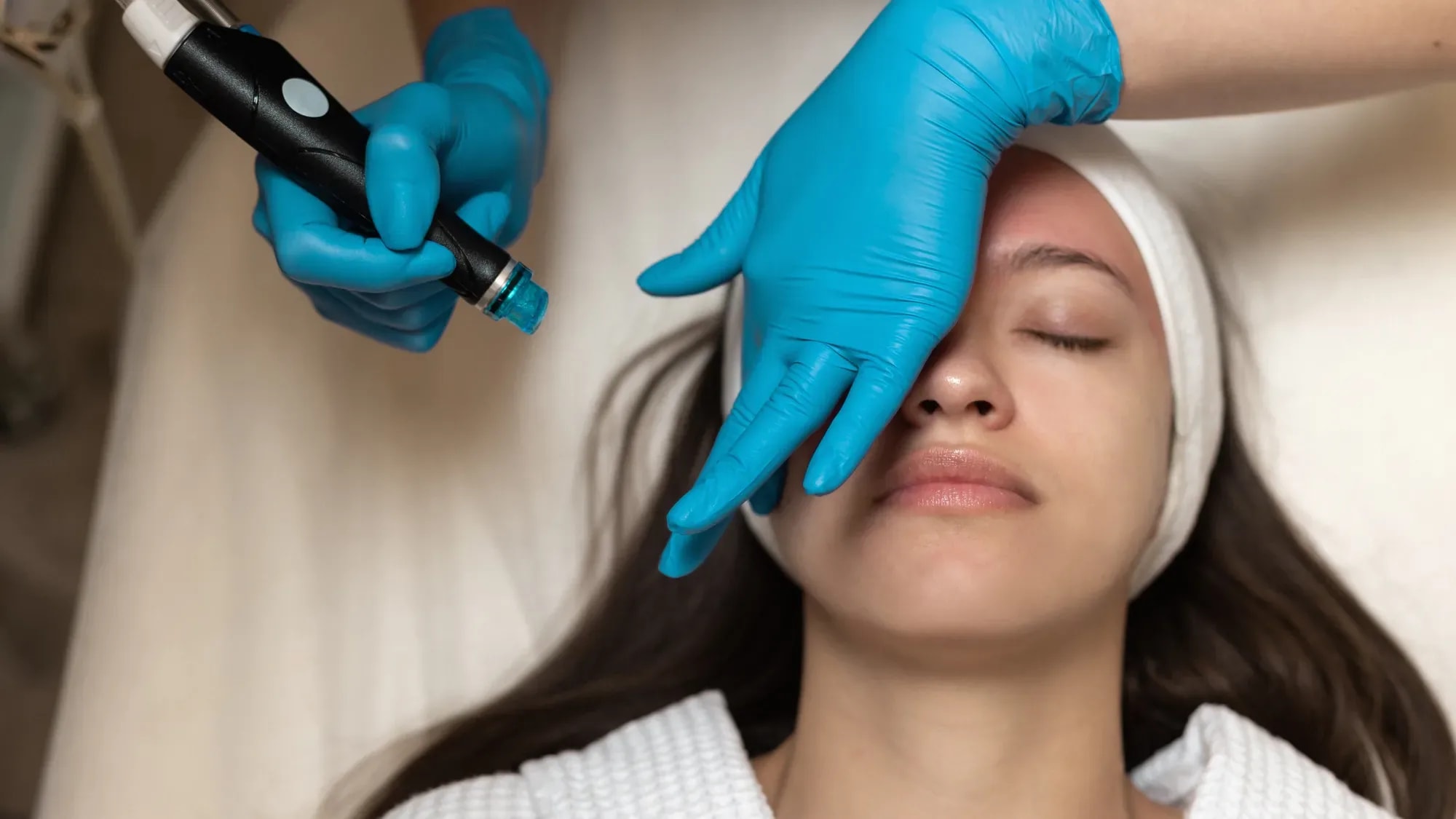
Dermaplaning vs HydraFacial is mainly a choice between surface exfoliation and a deeper cleanse: dermaplaning removes dead skin and fine facial hair with a sterile blade, while a HydraFacial® cleanses, exfoliates, extracts debris from pores and infuses serums in one session. If clogged pores and congestion are your main concern, a HydraFacial is often the more targeted option. Dermaplaning is mostly about smoothness and glow, and it is not done over active breakouts.
Congested skin usually means clogged pores, blackheads, rough texture or a dull surface. Both treatments are popular in med spas, take under an hour and have little downtime, but they work differently. This guide compares them so you can choose the one that suits your skin.
Dermaplaning vs. HydraFacial at a Glance
Dermaplaning is manual exfoliation with a blade that leaves skin smooth and helps makeup go on evenly. A HydraFacial is a device-based treatment that uses suction to clear pores and deliver hydrating serums. Neither treats acne as a medical condition, and both are performed by licensed estheticians or other trained providers.
How Dermaplaning Works
Dermaplaning uses a sterile blade, held at an angle, to gently scrape away the top layer of dead skin cells and fine vellus hair, often called peach fuzz. The treatment usually takes 30 to 45 minutes and does not hurt. Skin may look slightly pink for a few hours.
Dermaplaning Benefits
- Smoother-feeling skin right after treatment
- A brighter look as dull surface cells are removed
- Makeup that goes on more evenly
- Removal of fine facial hair, which grows back the same as before
Dermaplaning does not extract pores, so it does little for blackheads on its own.
How a HydraFacial Works
A HydraFacial uses a device with a spiral tip and vortex suction to cleanse, exfoliate, extract debris from pores and infuse serums, all in one session of about 30 to 60 minutes. Providers can add boosters for specific concerns.
HydraFacial Benefits
- Clearer-looking pores as suction lifts out debris
- Gentle exfoliation suited to many skin types
- Hydrating serums that can leave skin looking refreshed
- Little to no downtime for most people
This makes a HydraFacial for congested skin a common recommendation when blackheads and clogged pores are the main concern.
Key Differences Between Dermaplaning and HydraFacial
- Method: Dermaplaning uses a blade; a HydraFacial uses a suction device and serums.
- Pores: A HydraFacial extracts debris from pores; dermaplaning does not.
- Hair removal: Dermaplaning removes fine facial hair; a HydraFacial does not.
- Hydration: A HydraFacial infuses serums; dermaplaning is usually followed by a simple moisturizer.
- Active acne: Dermaplaning is postponed during breakouts; a HydraFacial may be adjusted for mild congestion, depending on your skin.
Some med spas combine the two, with dermaplaning first to remove surface buildup and a HydraFacial after.
Dermaplaning for Acne-Prone Skin: Who It Suits
Dermaplaning for acne-prone skin can work when acne is under control, but it is not done over active, inflamed breakouts. Running a blade over inflamed acne can irritate it and spread bacteria. The American Academy of Dermatology also advises that people with darker skin tones or dark spots avoid strong mechanical exfoliation, because it can increase pigmentation, and that you never exfoliate sunburned skin or open cuts. If you use prescription retinoids or benzoyl peroxide, tell your provider, since exfoliating can worsen dryness or trigger breakouts.
What Is the Best Facial for Clogged Pores?
The best facial for clogged pores depends on your skin type and what is causing the congestion. For blackheads and visible congestion, many providers start with a HydraFacial or another facial that includes extraction. For persistent breakouts, inflamed acne or pores that keep clogging, a dermatologist can recommend medical treatment, since facials manage the surface but do not treat the causes of acne.
Cost and How to Compare Providers
Dermaplaning and HydraFacial prices vary by city, provider and add-ons, so comparing listed prices in your area gives the clearest picture. A HydraFacial usually costs more than dermaplaning alone because it uses a device and single-use tips and serums, and boosters or LED light add to the total. Many med spas offer memberships or packages that lower the per-visit price for people who book monthly.
When you compare providers, look at more than price:
- Who performs the treatment, and their license and training
- Whether the provider asks about your skin type, medications and recent treatments first
- Whether they adjust or postpone treatment for active breakouts, rosacea or sunburn
- What aftercare instructions they give
- Patient reviews that mention results for skin like yours
When to See a Dermatologist Instead
A facial can help with surface congestion, but some skin concerns need medical care. See a dermatologist if you have painful cysts or nodules, breakouts that leave dark marks or scars, acne that has not improved after several months of over-the-counter care, or sudden changes in your skin. A dermatologist can prescribe treatments that address oil production, bacteria and inflammation, which facials do not change. Many people combine medical acne treatment with occasional facials once their skin is under control.
Aftercare and Timing
Both treatments have little downtime, but freshly exfoliated skin needs care for a day or two.
- Wear broad-spectrum sunscreen daily
- Skip scrubs, retinoids and strong acids for a day or two, or as your provider advises
- Avoid heavy sweating and very hot showers on the day of treatment
- Book a few days before an event, and at least a week ahead if it is your first time
Compare Facial Providers Near You
A skilled provider can tell you which treatment suits your skin today and how to keep pores clear between visits. When you are ready, you can compare facial providers and find HydraFacial providers near you on Medspa Maps to compare practices, read reviews, and book a consultation.
All brand names mentioned are trademarks of their respective owners.
Sources
- American Academy of Dermatology: How to safely exfoliate at home
Frequently asked questions
Does dermaplaning make hair grow back thicker?
No, dermaplaning does not make hair grow back thicker or darker. Cutting a hair leaves a blunt tip that can feel coarser as it grows. The hair's color, thickness and growth rate do not change.
How often should I get a HydraFacial for congested skin?
Many people book a HydraFacial every four to six weeks. That schedule roughly matches how often skin renews its surface. Your provider can adjust the timing based on your skin and budget.
Can I get dermaplaning and a HydraFacial together?
Yes, many med spas offer them together. Dermaplaning removes surface buildup first, then the HydraFacial cleanses pores and adds hydration. Ask whether combining them suits your skin, especially if it is sensitive.
Are these treatments safe for sensitive skin?
A HydraFacial is generally gentle, and providers can adjust it for sensitive skin. Dermaplaning may irritate very sensitive or reactive skin. Tell your provider about rosacea, eczema or recent treatments before booking.
Which is better before an event, dermaplaning or a HydraFacial?
Either can work if you have had it before and your skin tolerated it well. Book two to five days ahead so any pinkness settles. If it is your first time, schedule at least a week early in case your skin reacts.