
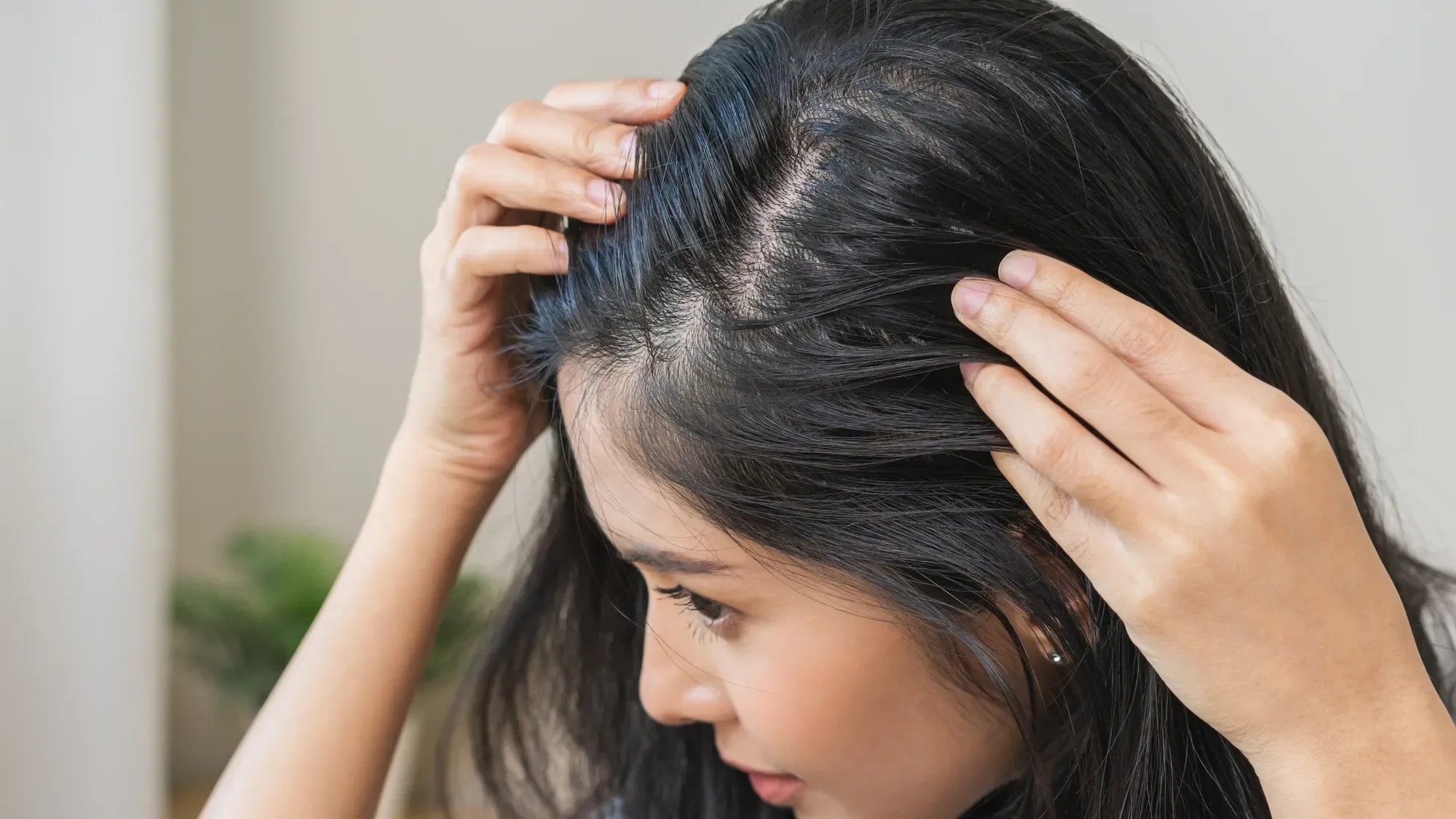
Female hair loss vs hair breakage comes down to where the hair fails: hair loss means hairs fall out from the root, often with a tiny white bulb at the end, while breakage means the hair shaft snaps partway along its length, leaving short, uneven pieces. Both can make hair look thinner, but they have different causes and need different fixes. Breakage often improves with gentler styling and care, while true hair loss may need a medical evaluation.
Noticing more hair in your brush or shower drain can be stressful. Knowing which problem you have helps you take the right next step. This guide explains how to tell the difference, what causes each one and when to see a specialist.
Hair Loss vs. Breakage: The Short Answer
Look at the hairs you are losing. Long hairs with a small bulb at one end usually mean shedding from the root. Short, broken pieces with no bulb usually mean breakage. A widening part, a smaller ponytail or patchy thinning points to hair loss, while frizz, split ends and uneven lengths point to breakage.
How to Tell if Hair Is Thinning or Breaking
If you are wondering how to tell if hair is thinning or breaking, a few simple checks can help.
- Check the ends: A white bulb at the root end suggests shedding; a blunt or frayed end with no bulb suggests breakage.
- Check the length: Shed hairs are usually full length; broken hairs are shorter pieces.
- Check your part and crown: A widening part or more visible scalp suggests thinning.
- Check the pattern: Breakage often shows up where hair is tied, brushed or heat-styled most.
Some people have both at once, so a dermatologist can help if the picture is unclear.
Female Hair Shedding: What Is Normal?
Female hair shedding of about 50 to 100 hairs a day is normal, according to the American Academy of Dermatology. Shedding can increase for a few months after a high fever, illness, childbirth, major stress, surgery or a sudden change in diet. This temporary shedding, called telogen effluvium, often settles on its own once the trigger passes. Shedding that continues for months, or that comes with thinning patches, deserves a medical check.
Hair Thinning in Women: Common Causes
Hair thinning in women can have several causes, and more than one can happen at the same time.
- Female pattern hair loss: Gradual thinning, often with a widening part, linked to genetics and hormones.
- Telogen effluvium: Temporary shedding after stress, illness or childbirth.
- Thyroid problems or low iron: Medical conditions that a blood test can check.
- Traction alopecia: Thinning from tight ponytails, braids or extensions over time.
- Alopecia areata: An autoimmune condition that causes patchy hair loss.
Causes of Hair Breakage
The most common causes of hair breakage are damage to the hair shaft from styling and handling.
- Frequent heat styling with flat irons, curling irons or hot blow-dryers
- Chemical processing such as bleaching, coloring, relaxers or perms
- Tight hairstyles and elastics that pull on the same spot
- Rough brushing, especially when hair is wet
- Dryness from over-washing or harsh products
Gentler habits, such as lowering heat, spacing out chemical treatments, using a wide-tooth comb and conditioning regularly, often reduce breakage over time.
Hair Loss Treatment for Women: What Are the Options?
Hair loss treatment for women depends on the cause, so a diagnosis comes first. Common options include:
- Topical minoxidil: FDA-approved and available over the counter for pattern hair loss in women.
- Treating underlying conditions: Correcting thyroid problems or low iron when tests show them.
- Prescription medicines: A dermatologist may prescribe other medicines, some of them off-label.
- Low-level laser devices: Some are FDA-cleared for hair growth.
- PRP: Offered by many providers, though it is not FDA-approved for hair loss and evidence is mixed.
Results usually take several months, and treatments generally need to be continued to keep results.
Everyday Habits That Help
Whether you are dealing with hair loss, breakage or both, gentle hair care protects the hair you have while you find the cause.
- Use a wide-tooth comb and detangle from the ends up, especially when hair is wet
- Lower the heat on styling tools and use a heat protectant
- Choose looser styles and soft scrunchies over tight elastics
- Space out coloring, bleaching and relaxers, and ask a stylist about bond-building treatments
- Eat a balanced diet with enough protein and iron, and ask your doctor before starting supplements
These habits mainly reduce breakage. They will not reverse pattern hair loss or a medical cause of shedding, which is why a diagnosis matters if thinning continues.
What to Expect at a Hair Loss Appointment
A dermatologist will usually ask about your health history, recent stress or illness, medications, diet and how you style your hair. They will examine your scalp and may gently pull on a small section of hair to see how easily it sheds. Blood tests may check thyroid function and iron. In some cases, a small scalp biopsy helps confirm the diagnosis. Bring a few photos taken over time, since they can show how your hair has changed.
When to See a Specialist
See a dermatologist if you notice sudden or patchy hair loss, a widening part, scalp pain, itching, redness or scaling, or shedding that lasts more than a few months. Starting treatment early often gives you more options. A dermatologist can examine your scalp, order blood tests if needed and tell you whether you are dealing with hair loss, breakage or both.
Find a Hair Loss Specialist Near You
Knowing whether you are facing hair loss or breakage is the first step to the right plan. When you are ready, you can find hair loss specialists and compare hair restoration providers near you on Medspa Maps to compare practices, read reviews, and book a consultation.
All brand names mentioned are trademarks of their respective owners.
Sources
- American Academy of Dermatology: Hair loss: Diagnosis and treatment
Frequently asked questions
Can breakage turn into hair loss?
Breakage alone does not cause hair to stop growing from the root. However, constant pulling from tight styles can lead to traction alopecia, which is true hair loss. Easing tension early can help prevent it.
Does hair grow back after shedding?
Hair often grows back after temporary shedding such as telogen effluvium. Regrowth can take several months. Pattern hair loss and some other conditions need treatment to slow thinning.
Should I get blood tests for thinning hair?
Your doctor may order blood tests if thinning is unexplained. Tests can check thyroid function, iron and other factors that affect hair. Ask your provider which tests make sense for you.
Who treats female hair loss?
Board-certified dermatologists diagnose and treat hair loss. Some med spas and hair restoration clinics also offer treatments such as PRP. Start with a diagnosis so you know which treatment fits.
Can stress cause hair loss in women?
Yes, major stress can trigger temporary shedding called telogen effluvium. It usually starts a few months after the stressful event and often improves on its own. If shedding lasts longer than several months, see a dermatologist to check for other causes.