
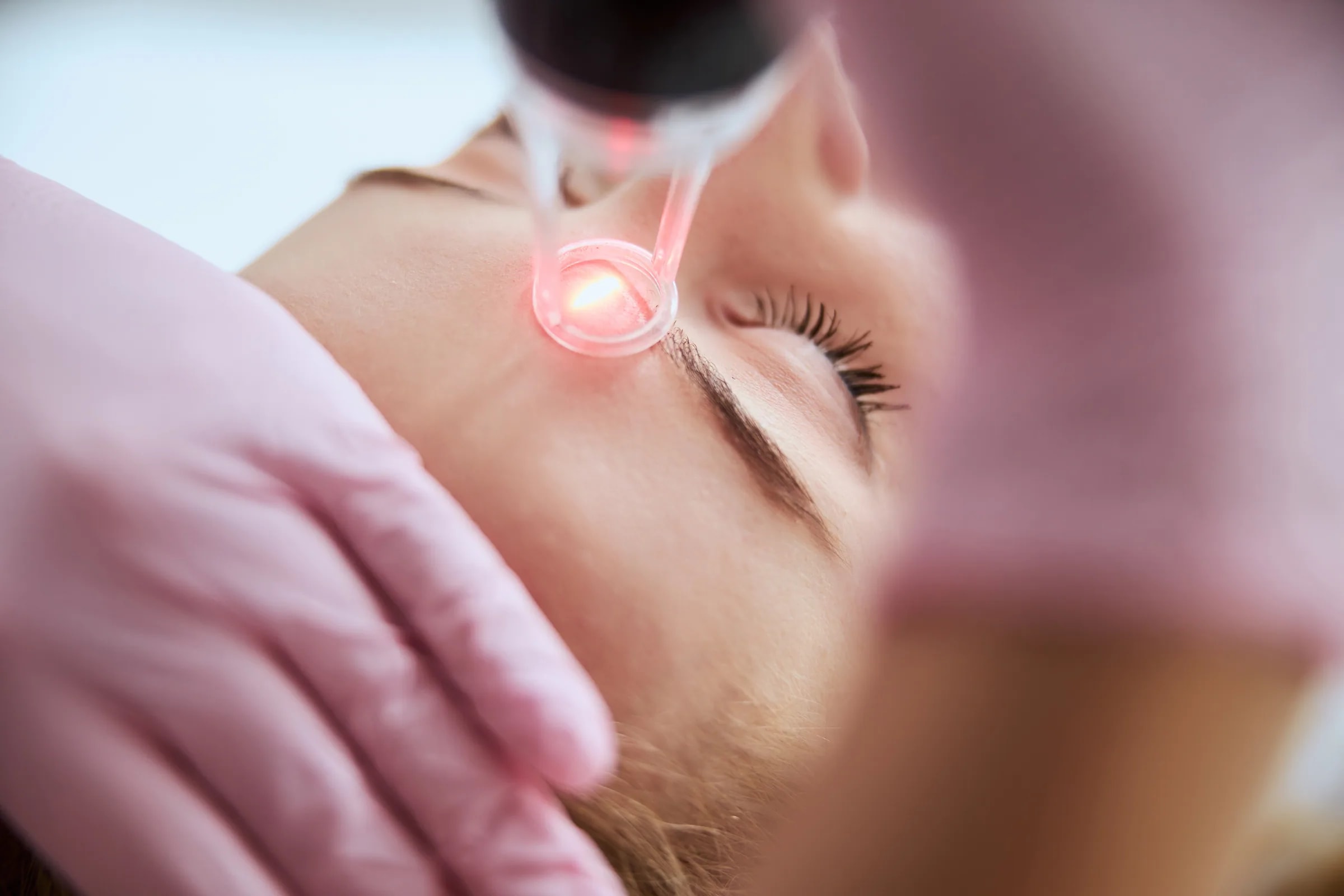
Laser skin treatments use focused light energy to improve concerns like sun damage, uneven tone, fine lines, acne scars and redness, and the right one depends on your skin goal, skin tone and how much downtime you can take. Some options need only a day or two of recovery, while deeper resurfacing can take one to two weeks to heal. Prices vary widely by device, treatment area and number of sessions. This guide compares the main types so you know what to ask when you look for a laser skin treatment near me.
No single laser is right for everyone. The provider's training, the device they use and their experience with your skin type matter as much as the treatment name.
Laser Skin Treatments at a Glance
Ablative lasers such as CO2 give the most change but need the most healing. Non-ablative fractional lasers improve texture and tone with less downtime. IPL and BBL® target brown spots and redness. Pigment and vascular lasers target specific spots or vessels. A consultation matches the device to your concern.
Types of Laser Facial Treatments
Laser facial treatments fall into a few broad groups.
Ablative Laser Resurfacing
Ablative laser resurfacing, including CO2 and erbium lasers, removes thin layers of skin to trigger healing and new collagen. It is often used for deeper wrinkles, significant sun damage and acne scars. Expect redness, swelling and peeling for about one to two weeks.
Non-Ablative Fractional Lasers
Non-ablative fractional lasers, such as Moxi®, heat tiny columns of skin without removing the surface. They improve texture, tone and early sun damage with a few days of redness, usually over a series of sessions.
IPL and BBL Photofacials
Intense pulsed light, including BBL®, which is Sciton's brand of IPL, uses broad-spectrum light to fade brown spots and redness. Downtime is minimal, and spots often darken and flake off over about a week.
Pigment and Vascular Lasers
Q-switched and picosecond lasers target specific pigmented spots, while vascular lasers such as pulsed dye lasers target redness and broken capillaries.
Laser Resurfacing vs. Other Skin Rejuvenation Treatments
Laser resurfacing is one of several skin rejuvenation treatments, and it isn't always the first choice. Microneedling, chemical peels and medical facials can improve texture and tone with less heat, which may suit people with darker skin or limited downtime. Lasers often create more change per session for deeper concerns. Many providers combine approaches over time based on your goals.
Laser Treatment Cost: What to Expect
Laser treatment cost depends on the device, the size of the area, the number of sessions and your location. The American Society of Plastic Surgeons reports 2023 national average physician fees of $1,829 for skin resurfacing, a category that includes lasers and chemical peels, and $697 for IPL and other combination laser treatments. Skin resurfacing cost can be higher for full-face ablative treatment and lower for small areas. Ask whether a quote includes numbing, aftercare products and follow-up visits. Cosmetic laser treatment is usually not covered by insurance.
Results and Downtime
Results build gradually as your skin heals and produces new collagen, often over several weeks to months. IPL results for spots may appear within a week or two. Downtime ranges from almost none for IPL to about two weeks for CO2. After any laser treatment, wear broad-spectrum SPF 30 or higher daily and avoid tanning, since sun exposure raises the risk of dark spots.
How to Compare Laser Providers Near You
Comparing providers is as important as comparing devices. When you review listings on Medspa Maps, look at which lasers each practice offers, who performs the treatments, and whether they describe experience with your skin type. Read patient reviews for comments about results, communication and how the practice handled side effects. Listings show information as provided by each practice, so confirm the details during your consultation.
A good consultation should include a skin assessment, a clear explanation of why a device suits your concern, a realistic timeline for results, and a written estimate for the full plan. Be cautious of any provider who recommends the same laser for every concern, promises specific results, or skips questions about your medical history, medications and recent sun exposure.
Preparing for Your Treatment
Most providers ask you to avoid tanning and direct sun for a few weeks before treatment, pause retinoids and exfoliating acids for several days, and arrive with clean skin. If you have a history of cold sores, tell your provider, since some laser treatments can trigger an outbreak and you may be given medication to prevent one.
Safety Questions to Ask Before Booking
Laser safety depends on matching the device and settings to your skin. Before you book, ask:
- Who performs the treatment, and what is their license and training?
- Which device will you use, and why is it right for my concern?
- How many patients with my skin tone have you treated with it?
- Can we start with a test spot?
- What downtime should I plan for, and what does aftercare involve?
Laser treatment may need to wait if you are pregnant, have a tan or sunburn, have an active skin infection or cold sore, or recently took isotretinoin.
Find Laser Skin Treatment Providers Near You
Choosing a laser is about matching the device to your skin and your schedule. You can compare laser skin treatment providers on Medspa Maps to compare practices, read reviews, and book a consultation.
All brand names mentioned are trademarks of their respective owners.
Sources
Frequently asked questions
Which laser is best for my skin?
The right laser depends on your concern, skin tone and downtime. CO2 suits deeper wrinkles and scars, fractional lasers suit texture, and IPL suits spots and redness. A provider assessment is the best way to choose.
Are laser treatments safe for darker skin?
Some are, with the right device and settings. IPL and aggressive ablative lasers carry higher pigment risk in darker skin. Choose a provider experienced with your skin tone and ask about test spots and alternatives.
How many laser sessions will I need?
It depends on the device. CO2 resurfacing is often one treatment, while fractional lasers and IPL usually take a series of three or more sessions, plus occasional maintenance.
Does laser treatment hurt?
Most laser treatments cause some discomfort, often described as heat or snapping. Providers usually apply numbing cream and use cooling. Deeper treatments may need stronger numbing.
How long do laser results last?
Results can last a long time, but your skin keeps aging. New sun damage and natural aging gradually change the skin again, so many people return for occasional maintenance sessions. Daily sunscreen helps results last longer.