
TL;DR — Key takeaways
- Hyperpigmentation is darkened patches of skin caused by excess melanin, usually from sun exposure, inflammation (acne, injury), or hormones (melasma).
- The three most common types are sun/age spots, post-inflammatory hyperpigmentation (PIH), and melasma, and they don’t all respond to the same treatments.
- Professional options include chemical peels, laser and IPL, microneedling, and prescription-strength topicals; the right choice depends on the type, depth, and your skin tone.
- Melasma and deeper skin tones need extra caution: aggressive lasers can worsen pigment, so gentler, melanin-safe approaches are often better.
- Most treatments take several weeks to a few months to show results, and daily SPF is non-negotiable to keep spots from returning.
- A licensed provider should confirm the type of pigmentation before treating it, and any new or changing spot should be checked to rule out something more serious.
What is hyperpigmentation?
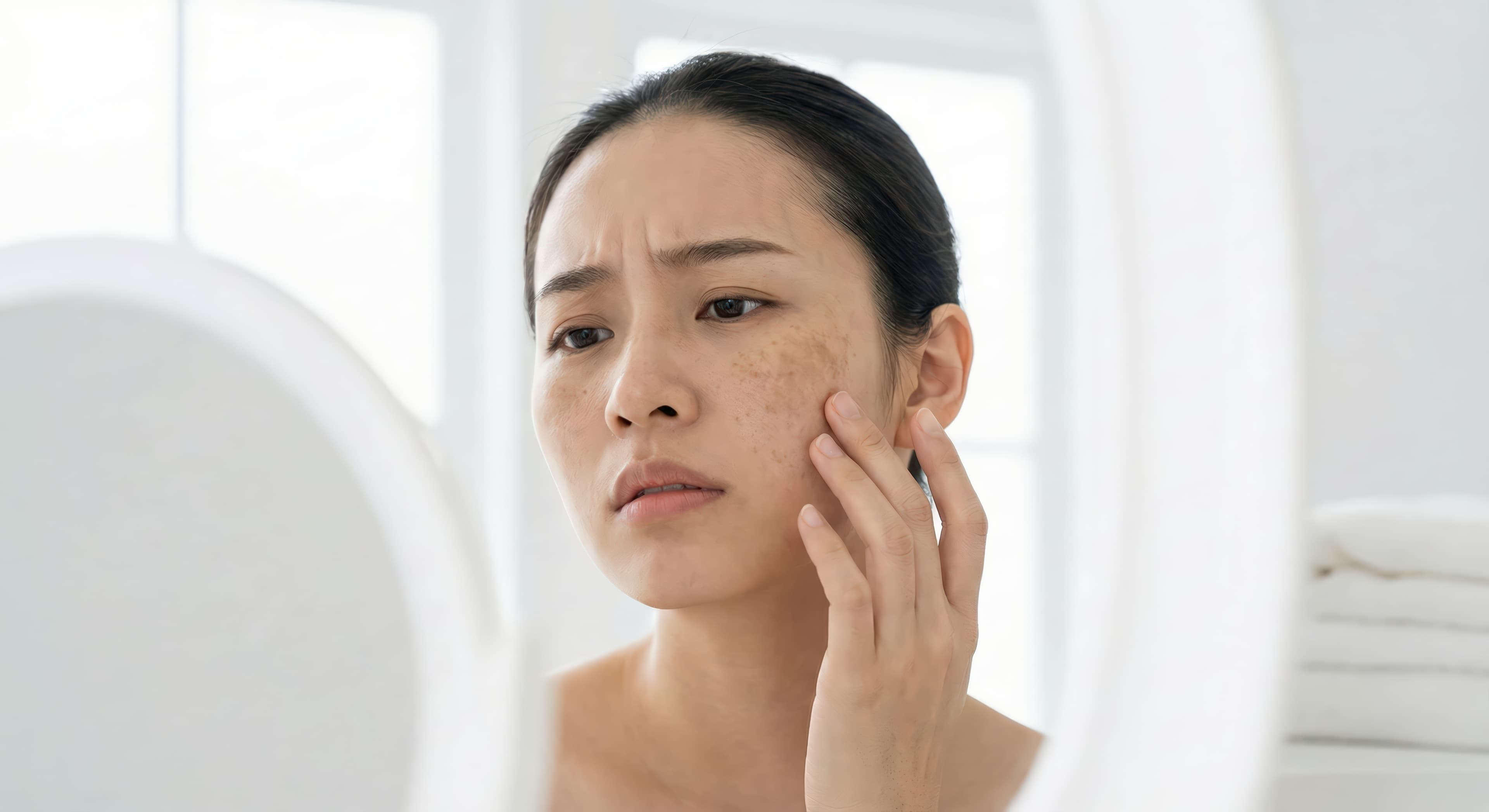
Hyperpigmentation is a common, usually harmless condition in which patches of skin become darker than the surrounding area because of excess melanin, the pigment that gives skin its color. It can appear as small spots, larger patches, or broad discoloration, most often on sun-exposed areas like the face, hands, and chest.
Melanin is produced by cells called melanocytes, and when they’re triggered to overproduce, by the sun, inflammation, or hormones, the extra pigment shows up as darker areas. While most hyperpigmentation is a cosmetic concern rather than a medical danger, any spot that is new, changing, itching, or bleeding should be evaluated by a dermatologist to rule out skin cancer.
What causes hyperpigmentation?
Hyperpigmentation has three main drivers: sun exposure, skin inflammation or injury, and hormonal changes. Certain medications and genetics can also play a role.
- Sun exposure: UV light stimulates melanin as a defense mechanism, producing sun spots and worsening most other pigmentation.
- Inflammation or injury: acne, eczema, cuts, or even cosmetic procedures can leave dark marks as the skin heals, known as post-inflammatory hyperpigmentation.
- Hormones: pregnancy, birth control, and hormone therapy can trigger melasma, a patchy discoloration often called the “mask of pregnancy.”
- Medications and genetics: some drugs increase sun sensitivity or pigmentation, and a family history can make you more prone.
What are the types of hyperpigmentation?
The three most common types are sun (or age) spots, post-inflammatory hyperpigmentation, and melasma. They look different, sit at different depths in the skin, and respond differently to treatment, which is why identifying the type comes first.
| Type | Typical cause | How it looks | Depth | Outlook |
|---|---|---|---|---|
| Sun / age spots | Cumulative UV exposure | Flat brown spots on sun-exposed skin | Surface (epidermal) | Responds well |
| Post-inflammatory (PIH) | Acne, injury, inflammation | Flat marks where a blemish healed | Surface to deeper | Fades over time; treatable |
| Melasma | Hormones plus sun | Larger, symmetric patches on cheeks, forehead, lip | Often deeper / mixed | Manageable; prone to recurrence |
Depth is the key factor. Pigment sitting near the surface is generally easier and faster to treat, while deeper pigment, common in melasma, is more stubborn and can react unpredictably to aggressive treatment.
“Not all dark spots are the same. Sun spots, post-inflammatory marks, and melasma respond to different treatments, which is why the first step is correctly identifying the type.”
Which medspa treatments actually work on dark spots?
The most effective in-office options are chemical peels, laser and IPL, microneedling, and prescription-strength topicals, but the right one depends on the type of pigmentation, how deep it is, and your skin tone. Many providers combine treatments for the best result.
Chemical peels
Chemical peels use acids to exfoliate pigmented surface cells and speed up cell turnover, revealing brighter skin underneath. Superficial and medium-depth peels can work well for sun spots and post-inflammatory hyperpigmentation, and gentler formulas can be used cautiously across skin tones.
Laser treatments
Lasers target pigment with focused energy. Pigment-specific lasers (such as Q-switched and picosecond devices) can break up sun spots, while fractional resurfacing lasers improve pigment along with texture. Lasers can be highly effective but require caution, they are not usually the first choice for melasma, and they demand extra care in deeper skin tones. (Our guide to laser skin treatments breaks down which device suits which concern.)
IPL / BBL (intense pulsed light)
IPL and the more advanced BBL use broadband light to target excess pigment and redness, and can noticeably even out tone. They tend to work best on lighter skin tones with sun-related spots, and are generally not recommended for melasma or for deeper skin tones, where they can worsen pigmentation.
Microneedling
Microneedling creates controlled micro-channels in the skin that boost cell turnover and help brightening ingredients penetrate. It’s often paired with topical actives and is considered one of the safer options across a range of skin tones, making it a useful choice for post-inflammatory hyperpigmentation.
Prescription-strength topicals
Ingredients like hydroquinone, tretinoin, azelaic acid, kojic acid, and vitamin C can fade pigment over time and are frequently used as a first-line treatment or alongside in-office procedures. A provider can build a regimen suited to your pigmentation type and skin tone.
What’s the best treatment for melasma?
Melasma is best managed with a gentle, consistent combination of strict sun protection, prescription topicals, and conservative in-office treatments, not aggressive lasers, which can actually make it worse. Melasma can be controlled, but it tends to recur, so it’s managed rather than cured.
Because melasma is driven by hormones and sun, daily broad-spectrum SPF is the foundation of any plan. Providers often start with topicals and gentle peels, using energy-based devices cautiously and only when appropriate. Setting realistic expectations matters here: improvement is very achievable, but ongoing maintenance is part of the deal.
Is treating hyperpigmentation safe for darker skin tones?
Yes, but device and technique choice are critical. Deeper skin tones have more active melanin, so heat- and light-based treatments like aggressive lasers and IPL can sometimes trigger more pigment or cause burns. Gentler, melanin-safe options in experienced hands are often the smarter starting point.
Safer approaches for richer skin tones often include microneedling, superficial chemical peels, prescription topicals, and specific laser wavelengths (such as certain Nd:YAG lasers) used at conservative settings. The single most important safeguard is choosing a provider who is experienced in treating skin of color and understands how it responds.
“In deeper skin tones, aggressive laser treatments can actually trigger more pigment. Gentler, melanin-safe options are often the smarter starting point.”
How long does it take for dark spots to fade?
Most people see gradual improvement over several weeks to a few months, not overnight. Surface-level pigment tends to respond faster, while deeper pigment and melasma take longer and require patience and consistency.
A series of treatments is usually needed rather than a single session, and results depend heavily on protecting your skin from the sun throughout. Skipping SPF is the fastest way to undo your progress.
How to prevent hyperpigmentation from coming back
Prevention comes down to sun protection and managing your triggers. Daily broad-spectrum sunscreen is the single most effective way to keep dark spots from returning or worsening.
- Wear broad-spectrum SPF 30+ every day and reapply, even indoors near windows and on cloudy days.
- Treat acne and skin irritation early to prevent post-inflammatory marks.
- Avoid picking or squeezing blemishes, which drives pigmentation.
- Manage hormonal triggers with your provider where relevant.
- Keep up a maintenance regimen, brightening topicals and periodic treatments, as advised.
When to see a professional
If over-the-counter products haven’t worked, your pigmentation is widespread or worsening, or you’re not sure what type you have, it’s worth seeing a licensed provider. Correctly identifying the pigmentation is the difference between a treatment that helps and one that makes things worse.
A professional can diagnose the type, rule out anything concerning, and build a plan matched to your skin. If you’re comparing options nearby, Medspa Maps helps you find and compare qualified providers experienced in treating hyperpigmentation, including for deeper skin tones, before you book a consultation.
Frequently asked questions
What is the fastest way to fade dark spots?
In-office treatments like chemical peels, lasers, and IPL generally work faster than at-home products, but “fast” still means weeks, not days. The best approach depends on the type of pigmentation, and daily sunscreen is essential to keep results from reversing.
Can hyperpigmentation be permanent?
Some hyperpigmentation fades on its own over months, especially post-inflammatory marks, while deeper or long-standing pigment can be stubborn. Most cases can be improved with the right treatment, though results vary and some conditions like melasma tend to recur.
Does hyperpigmentation go away on its own?
Post-inflammatory hyperpigmentation often fades gradually over several months without treatment, but sun exposure can prolong it. Sun spots and melasma usually need active treatment and sun protection to improve.
Is laser or a chemical peel better for dark spots?
It depends on the pigmentation type, its depth, and your skin tone. Peels are versatile and gentler; lasers can be more targeted but carry more risk in deeper skin tones. A provider matches the treatment to your specific situation.
Is treatment safe for Black and brown skin?
Yes, but device and technique choice are critical. Deeper skin tones have more active melanin, so aggressive lasers and IPL can sometimes worsen pigment. Gentler, melanin-safe options in the hands of an experienced provider are often the smarter starting point.
Why does my hyperpigmentation keep coming back?
Sun exposure is the most common reason pigmentation returns, and hormonal triggers can drive recurrence in melasma. Consistent daily SPF and maintenance care are key to keeping spots from reappearing.
How much do professional hyperpigmentation treatments cost?
Costs vary widely by the treatment, the number of sessions needed, and your location, and most people need a series rather than a single visit. A consultation gives you an accurate estimate for your plan.