
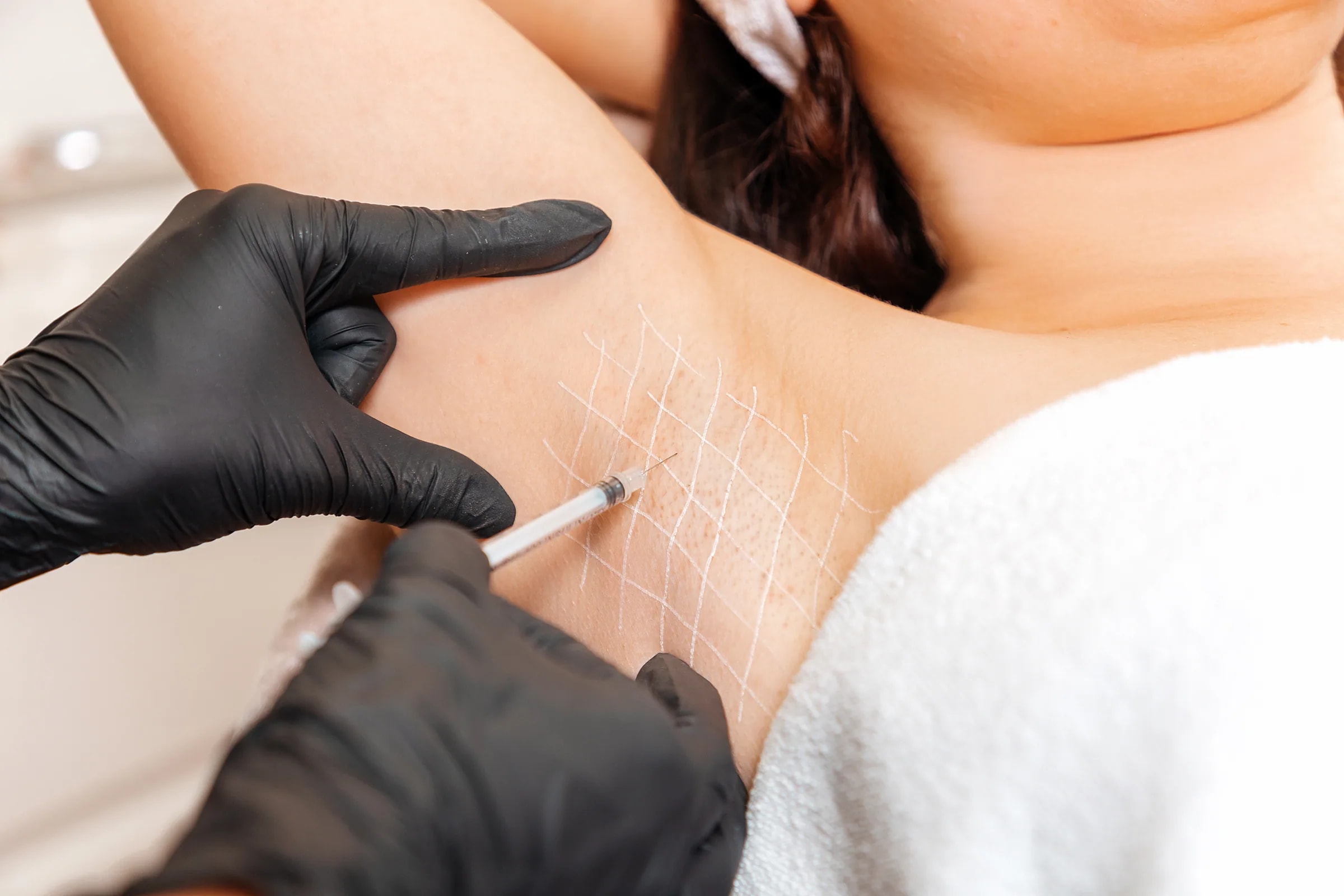
Botox for excessive sweating works by blocking the nerve signals that switch on sweat glands, and for underarm sweating it often reduces sweat for several months per treatment. Botox® is FDA-approved for severe primary underarm sweating in adults when topical treatments have not been enough. Treatment takes about 15 to 30 minutes, involves a series of small injections, and needs no downtime for most people. Results are not permanent, so most people return for repeat treatments when sweating comes back.
If heavy sweating stains your clothes or affects your confidence, you are not alone, and you have options. This guide explains how long results last, what drives underarm Botox cost, whether insurance may help, and the safety questions to ask before your appointment.
Hyperhidrosis Botox Treatment at a Glance
Hyperhidrosis Botox treatment is an in-office procedure where a clinician injects small amounts of Botox® into the skin of the treated area. For the underarms, it is FDA-approved for adults with severe primary sweating that topical products have not controlled. Results usually start within about a week and last for months. Use on the hands, feet, or face is off-label and should be discussed with a dermatologist.
How Botox Reduces Sweating
Botox® reduces sweating by temporarily blocking acetylcholine, the chemical messenger that tells sweat glands to produce sweat. The sweat glands themselves stay in place, so sweating gradually returns as the effect wears off. Before treatment, some providers do a starch-iodine test, which turns dark where you sweat, to map the area. The injections are placed just under the skin in a grid pattern across that area.
How Long Does Botox for Sweating Last?
If you are wondering how long does Botox for sweating lasts, results for underarm sweating commonly last several months. In Botox® clinical studies for underarm sweating, the median time before sweating returned after the first treatment was 201 days, or about six and a half months. Your own results may be shorter or longer depending on your body, the dose, and the area treated. Many people schedule repeat treatments once or twice a year. Results on the hands and feet may not last as long, and these uses are off-label.
Underarm Botox Cost: What Affects the Price
Underarm Botox cost depends on several factors, and there is no reliable national average published for this treatment. Factors that affect the price include:
- Number of units: Treating sweating usually takes more units than cosmetic wrinkle treatment, which raises the cost.
- Treatment area: Underarms, hands, and feet each need different amounts of product.
- Provider type and location: Dermatologists and clinics in large cities may charge more.
- Insurance coverage: Some plans cover Botox® for hyperhidrosis, which can change your out-of-pocket cost a great deal.
- Follow-up and repeat sessions: Plan for ongoing treatments when you budget.
Ask for a written estimate that lists the number of units, the price per unit or per area, and any visit fees. If you are paying out of pocket, ask whether the clinic offers payment plans or package pricing for repeat treatments.
Does Insurance Cover Botox for Sweating?
Insurance may cover Botox® for underarm hyperhidrosis when it is medically necessary. Many insurers require you to try a prescription antiperspirant first and may ask for prior authorization from your doctor. Coverage for the hands or feet is less common because those uses are off-label. Your dermatologist's office can often help with paperwork, so ask about coverage before your first treatment.
Safety Questions to Ask Before Treatment
Botox® for sweating is generally well tolerated when given by a trained, licensed clinician, but it is still a prescription medicine. Common side effects include injection-site pain, bruising and, for hands, temporary weakness in grip. Ask your provider:
- Are you licensed and trained to treat hyperhidrosis with Botox®?
- Is the product FDA-approved and from a licensed source?
- How many units do you plan to use, and what is the total cost?
- What side effects should I watch for, and how do I reach you?
- Should we rule out a medical cause for my sweating first?
Tell your provider if you are pregnant or breastfeeding, have a neuromuscular condition, or take medicines that could interact with botulinum toxin. The CDC also advises asking your provider to draw the product from the labeled vial while you watch.
Alternatives to Botox for Sweating
If Botox® is not a good fit, other options include:
- Prescription antiperspirants: Aluminum chloride products are often the first step and are applied at night to dry skin.
- Prescription topical medicines: Qbrexza® (glycopyrronium cloths) and Sofdra (sofpironium gel, approved in 2024 for ages 9 and older) are FDA-approved for primary underarm sweating.
- Iontophoresis: A device that passes a mild current through water, mainly for sweaty hands and feet. It needs regular sessions.
- miraDry®: An FDA-cleared microwave device for the underarms. Results can be long-lasting for many people, though there is some downtime with swelling and tenderness.
A dermatologist can help you compare how long each option lasts, its cost and its downtime. Some people use topical treatments between Botox® sessions to extend results.
What to Expect During and After Treatment
Hyperhidrosis Botox treatment is quick, and most people go back to their day afterward. Before injections, your provider cleans the skin and may map the sweaty area. During treatment, you feel a series of small pinches. Afterward, you may notice small bumps or mild redness at the injection sites, which usually fade within hours. Your provider may suggest avoiding heavy exercise or saunas for the rest of the day. Keep a simple sweat diary in the weeks after treatment so you can tell your provider how well it worked and when sweating begins to return.
Find Botox for Sweating Near You
The right provider will check for underlying causes, explain your options and give you a clear estimate before treatment. You can find Botox providers near you on Medspa Maps to compare practices, read reviews, and book a consultation.
All brand names mentioned are trademarks of their respective owners.
Sources
Frequently asked questions
Does underarm Botox hurt?
Most people feel quick pinches during underarm Botox injections. The needles are very fine, and some providers use ice or numbing cream first. Treatment takes about 15 to 30 minutes, and most people return to normal activities right away.
When will I see results?
Most people notice less sweating within a few days to two weeks. The full effect usually develops by about two weeks after treatment. If you still sweat heavily after that, talk to your provider about the dose or other options.
Can Botox be used for sweaty hands or feet?
Yes, but it is off-label for hands and feet. Hand injections can be more uncomfortable and may cause temporary grip weakness. Iontophoresis is often tried first for these areas, so discuss the trade-offs with a dermatologist.
Is Botox for sweating safe?
It is generally well tolerated when given by a licensed, trained provider using an FDA-approved product. Side effects are usually mild and temporary. Serious reactions are rare, and CDC warnings have linked harmful reactions to counterfeit or mishandled products.